%20--%3e%3cg%3e%3cg%20id='Layer_1'%3e%3cg%3e%3cg%3e%3cg%3e%3cg%3e%3cpath%20class='cls-1'%20d='M54.7,12.3c-1.4-1-3.3-1.6-5.5-1.6s-4.1.5-5.5,1.6c-1.7,1.2-2.5,2.9-2.5,5v11.8h5v-11.8c0-.4.1-.7.5-.9.6-.4,1.4-.6,2.6-.6s2,.2,2.6.6c.3.2.4.5.4.9v9.8c0,.5.2,1,.6,1.4.4.4.8.6,1.4.6h3v-11.8c0-2.1-.8-3.7-2.5-5Z'/%3e%3cpath%20class='cls-1'%20d='M75.4,11.1c-1,0-1.9.4-2.5,1.1-1.5-1.1-3.4-1.6-5.5-1.5s-4.4,1.1-6,2.7-2.7,4-2.7,6.5,1,4.9,2.7,6.7,4,2.7,6.6,2.7,3.4-.5,4.8-1.5c.6.7,1.4,1.1,2.5,1.1h1.7V11.1h-1.7ZM71.2,23.2c-.9.9-1.9,1.3-3.2,1.3s-2.3-.5-3.1-1.3-1.2-1.8-1.2-3,.4-2.3,1.2-3.1,1.9-1.3,3.1-1.3,2.2.4,3.1,1.3c.9.9,1.3,1.9,1.3,3.1s-.4,2.2-1.3,3.1h0Z'/%3e%3cpath%20class='cls-1'%20d='M89.5,10.7c-1.5,0-2.8.3-4,1v-6.8h-5v24.1h1.7c1,0,1.9-.4,2.5-1.1,1.5,1.1,3.2,1.6,5.2,1.5s4.7-1.1,6.3-2.8,2.7-4,2.7-6.5-.9-4.8-2.7-6.6c-1.8-1.8-4-2.7-6.6-2.7ZM92.6,23.2c-.9.9-1.9,1.3-3.1,1.3s-2.3-.5-3.1-1.3-1.3-1.9-1.3-3.1.5-2.3,1.3-3.1,1.9-1.3,3.1-1.3,2.3.5,3.1,1.3,1.3,1.9,1.3,3.1-.5,2.3-1.3,3.1Z'/%3e%3cpath%20class='cls-1'%20d='M116.3,11.1c-1,0-1.9.4-2.5,1.1-1.5-1.1-3.4-1.6-5.5-1.5s-4.4,1.1-6,2.7-2.7,4-2.7,6.5,1,4.9,2.7,6.7,4,2.7,6.6,2.7,3.4-.5,4.8-1.5c.6.7,1.4,1.1,2.5,1.1h1.7V11.1h-1.7ZM112.1,23.2c-.9.9-1.9,1.3-3.2,1.3s-2.3-.5-3.1-1.3-1.2-1.8-1.2-3,.4-2.3,1.2-3.1,1.9-1.3,3.1-1.3,2.2.4,3.1,1.3c.9.9,1.3,1.9,1.3,3.1s-.4,2.2-1.3,3.1h0Z'/%3e%3cpath%20class='cls-1'%20d='M157.2,11.1c-1,0-1.9.4-2.5,1.1-1.5-1.1-3.4-1.6-5.5-1.5s-4.4,1.1-6,2.7c-1.8,1.8-2.7,4-2.7,6.5s1,4.9,2.7,6.7,4,2.7,6.6,2.7,3.4-.5,4.8-1.5c.6.7,1.4,1.1,2.5,1.1h1.7V11.1h-1.7ZM153,23.2c-.9.9-1.9,1.3-3.2,1.3s-2.3-.5-3.1-1.3-1.2-1.8-1.2-3,.4-2.3,1.2-3.1,1.9-1.3,3.1-1.3,2.2.4,3.1,1.3c.9.9,1.3,1.9,1.3,3.1s-.4,2.2-1.3,3.1h0Z'/%3e%3cpath%20class='cls-1'%20d='M164.6,10.6c.8,0,1.5-.3,2.1-.9.6-.6.9-1.3.9-2.1s-.3-1.5-.9-2.1c-.6-.6-1.3-.9-2.1-.9s-1.5.3-2.1.9c-.6.6-.9,1.3-.9,2.1s.3,1.5.9,2.1c.6.6,1.3.9,2.1.9Z'/%3e%3c/g%3e%3cpath%20class='cls-1'%20d='M130.2,24c0,0-.2,0-.2.1-.3.2-1.8.3-2.3.3s-1.1-.1-1.4-.4c-.2-.2-.3-.6-.3-1.2v-6.8h2.4c.5,0,1-.2,1.4-.6.4-.4.6-.8.6-1.4v-3h-4.3v-1.6c0-.5-.1-1-.4-1.4-.7-1.1-1.7-1.6-2.8-1.6h-1.7v16.4c0,1.9.6,3.5,1.9,4.7,1.2,1.2,2.8,1.8,4.8,1.8s1.8,0,2.6-.2v-5.3Z'/%3e%3c/g%3e%3crect%20class='cls-1'%20x='162'%20y='11.6'%20width='5'%20height='17.6'/%3e%3cpath%20class='cls-1'%20d='M139.6,26.1c0,1.8-1.5,3.3-3.3,3.3s-2.6-.2-2.8-.2c0,0-.5-2.2-.5-3.1,0-1.8,1.5-3.3,3.3-3.3s2.8.1,3,.4c.2.4.4,2,.4,3Z'/%3e%3c/g%3e%3cpath%20class='cls-1'%20d='M29.3,17.5c-1.9,0-3.5,1.3-3.9,3h-.3c-2.8,0-5.3,1.2-7,3.1v-4.9c0-3.3.5-4.5,3.2-4.6.5,1.6,2,2.7,3.8,2.7s4-1.8,4-4-1.8-4-4-4-3.3,1.2-3.8,2.9c-1.3,0-2.3.3-3.1.7v-4.6c1.6-.5,2.7-2,2.7-3.8S19,.2,16.8.2s-4,1.8-4,4,1.2,3.3,2.9,3.8v4.6c-.8-.5-1.9-.7-3.3-.8-.5-1.7-2-2.9-3.8-2.9s-4,1.8-4,4,1.8,4,4,4,3.2-1.1,3.8-2.7c0,0,0,0,0,0,2.8,0,3.3,1.1,3.3,4.6v4.9c-1.7-1.9-4.2-3.1-7-3.1h-.7c-.4-1.7-2-3-3.9-3S0,19.3,0,21.5s1.8,4,4,4,3.1-1,3.7-2.5h.9c3.9,0,7,3.1,7,7v1.6h-4.2c-.7,0-1.2.5-1.2,1.2s.5,1.2,1.2,1.2h10.9c.7,0,1.2-.5,1.2-1.2s-.5-1.2-1.2-1.2h-4.2v-1.6c0-3.9,3.2-7,7-7h.5c.6,1.5,2,2.5,3.7,2.5s4-1.8,4-4-1.8-4-4-4ZM25,11.4c.9,0,1.6.7,1.6,1.6s-.7,1.6-1.6,1.6-1.6-.7-1.6-1.6.7-1.6,1.6-1.6ZM8.6,14.5c-.9,0-1.6-.7-1.6-1.6s.7-1.6,1.6-1.6,1.6.7,1.6,1.6-.7,1.6-1.6,1.6ZM4.1,23.1c-.9,0-1.6-.7-1.6-1.6s.7-1.6,1.6-1.6,1.6.7,1.6,1.6-.7,1.6-1.6,1.6ZM16.8,5.7c-.9,0-1.6-.7-1.6-1.6s.7-1.6,1.6-1.6,1.6.7,1.6,1.6-.7,1.6-1.6,1.6ZM29.3,23.1s0,0,0,0c0,0,0,0,0,0,0,0-.1,0-.2,0,0,0,0,0,0,0-.8-.1-1.3-.8-1.3-1.5s.6-1.5,1.4-1.6c0,0,0,0,0,0,0,0,0,0,0,0s0,0,0,0c0,0,0,0,0,0,.9,0,1.6.7,1.6,1.6s-.7,1.6-1.6,1.6Z'/%3e%3c/g%3e%3c/g%3e%3c/g%3e%3c/svg%3e)

As temperatures begin to ease across the UAE, restoration teams are preparing for the planting season, one of the busiest periods of the ecological calendar. Seed collection programs are wrapping up, nurseries are preparing stock, and plans are being finalized for another season of seeding, planting and habitat restoration. There is something particularly exciting about this point in the year. After months of collecting, mapping, planning and preparing – much of it through the hottest and least glamorous part of the field season – things are about to start going into the ground.
At Nabat, we are approaching that point now. Seeds that have been collected, assessed and carefully stored will soon be heading out into restoration sites across the UAE. And perhaps because I know how much work has gone into getting them this far, I have found myself feeling surprisingly protective of them. More so this year than most.
Facing a changing climate
I’ll admit, I find the current climate forecasts unsettling. Perhaps more so when we are about to put millions of seeds and young plants into the ground. You spend months collecting, planning, mapping and preparing – and then ultimately hand something incredibly small and vulnerable over to the climate and hope you have given it the best possible chance. For those of us working on restoration here, climate change in UAE is not an abstract projection; it is the condition our work has to succeed under.
This year, that handover feels particularly uncertain.
The Arabian Peninsula is warming up to three times faster than the global average, a rate that puts it on pace with the Arctic, and research led by climate scientists at the European Centre for Medium-Range Weather Forecasts projects the region will cross key warming thresholds two to three decades before the rest of the world does. On the hottest days, what the region actually feels, factoring in humidity and wind rather than just air temperature, has risen by roughly 4°C since the 1970s, against 2–3°C across most other parts of the world. That is the backdrop every planting season now happens against, whatever any single year’s forecast says.
Coastal waters are shifting too. Marine heatwaves in the Arabian Gulf are becoming more frequent and more intense, and recent research has already linked them to coral bleaching, seagrass loss and mangrove stress, with sea temperatures crossing 37.6°C triggering fish kills along parts of the coast. For a program restoring coastal and marine habitats, that isn’t a distant risk. It’s the water this season’s seedlings are going into.
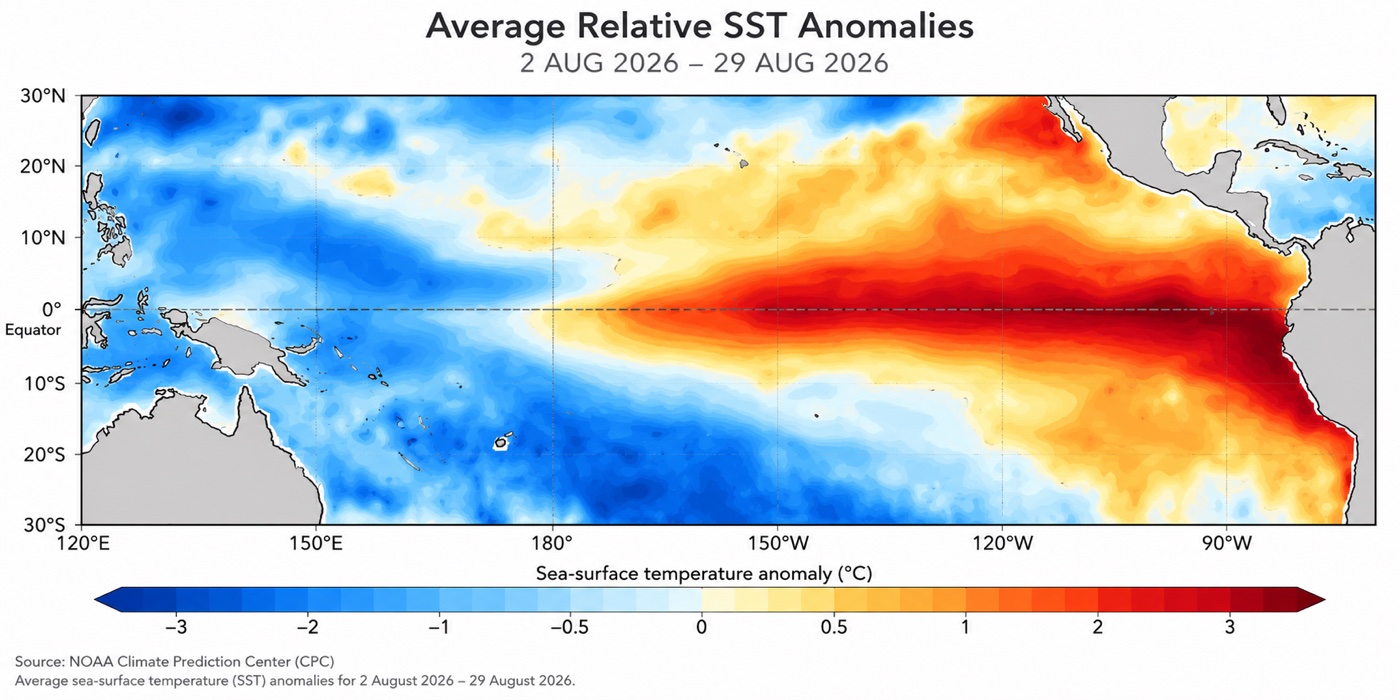
And then there’s this year’s most immediate driver. El Niño is already present in the tropical Pacific and strengthening. NOAA currently puts the probability of a very strong El Niño during the Northern Hemisphere autumn and winter of 2026–27 at greater than 90 percent. More strikingly, its August outlook estimated a 69 percent chance that the event could reach a level exceeding previous El Niño events in the observational record going back to 1950.
The UAE is watching the same development closely. The National Center of Meteorology’s latest seasonal outlook puts the probability of El Niño conditions continuing from August to December at 99 percent, with temperatures and rainfall expected to range from near to above seasonal averages.
Then there is the name that inevitably gets everyone’s attention: “Godzilla El Niño.”
It isn’t a scientific classification. The nickname originally came from a NASA climatologist describing the enormous 2015–16 event, and its return probably says as much about our appetite for dramatic weather headlines as it does about the science. Still, behind the nickname is a genuinely powerful climate event developing against a world that is already considerably warmer.
What happens if those first weeks of seedling establishment coincide with extreme heat or an unusually long dry period, or if intense rainfall arrives instead? For coastal restoration, storm conditions or surge interacting with a newly seeded site is its own kind of risk.
These forecasts don’t tell us exactly what conditions individual restoration sites will experience this season. But they do highlight a broader uncertainty that restoration programs increasingly need to consider: the environmental conditions we plan for today may not be the conditions these ecosystems experience in the years ahead.
Are we restoring landscapes for the climate we know today, or for the climate they will face tomorrow?
Designing for uncertainty
I don’t think the answer is that we somehow predict every future condition correctly. We can’t.
What we can do is give restoration the strongest possible starting point: understand local hydrology and topography, learn from reference ecosystems, and choose planting locations and windows based on the best evidence available, which for us means the mapping and site assessment that happen long before anything goes into the ground. And then we pay attention.
For the seeds Nabat is putting into the ground this season, that means the story doesn’t stop at deployment. We know where interventions have taken place, and increasingly we can return to those landscapes and see what actually happened. Which areas established well? Where did we see losses? Were there patterns in the landscape that help explain the difference? Did some locations cope better than others?
Some of those answers will come from people standing in muddy boots looking at saplings. Others will come from drones, satellite imagery and the monitoring capabilities within NabatOS. Neither replaces the other.
That is the idea behind AI with muddy boots. The imagery and models within NabatOS show us where establishment is diverging from what we expected, across areas no field team could walk in a single season. Understanding why it diverged still begins with someone standing in the site, and what they find goes straight back into how we plan and monitor the next one.
Of course, not every site will establish as successfully as we hope. A site where establishment struggles isn’t simply a failed data point to hide in a report. It tells us something. Maybe the planting window was wrong. Maybe hydrology behaved differently than expected. Maybe conditions changed. The important thing is that we can see it, investigate it and carry that knowledge into the next season. That only works if the monitoring is honest about losses as well as gains, and if the record is something we can verify rather than something we remember.
That feels increasingly important to me because climate change in the UAE is shifting restoration away from the idea that we can identify a single correct recipe and repeat it indefinitely. The conditions themselves are changing, which means restoration has to retain the ability to learn.
Planting for resilience
There are still things we can stack in nature’s favor.
In the UAE, our mangrove restoration work focuses on Avicennia marina, the native gray mangrove well adapted to the region’s highly saline, dry conditions. So, resilience here isn’t necessarily about planting a greater diversity of species. It is about putting the right species in the right places, understanding local hydrology and site conditions, and giving each intervention every chance to establish.
That doesn’t make a restored ecosystem invulnerable to extreme heat, drought, flooding or other environmental pressures. But perhaps invulnerability is the wrong goal anyway. What matters is whether these ecosystems can continue to function, recover and persist as conditions change. That is climate change adaptation in practice wherein we build the capacity of ecosystems to absorb shocks and keep functioning.
Planting for tomorrow
There is still something inherently hopeful about seeding and planting. We cannot control exactly what those seeds will encounter, but we can give them the strongest possible start, monitor how they establish, and use what we learn to improve the decisions we make in future seasons.
As planting season gets underway across the UAE, I’ll certainly be watching our sites with a little more interest than usual. Not only to see where establishment is successful, but to understand how these young ecosystems respond to the conditions they encounter.
So, the question I started with has an answer, at least for us. We plant for the climate these ecosystems will face by treating every season as evidence rather than a finish line. The seeds go in, we watch what happens to them, in the field and from above, and the next season starts from what this one taught us and that is what climate change adaptation looks like for a restoration program.
Learn more.
Nabat's AI with Muddy Boots series follows our people and the technology behind ecosystem restoration. Read the rest of the series or get in touch to find out how NabatOS supports restoration planning and monitoring across coastal and dryland environments.