%20--%3e%3cg%3e%3cg%20id='Layer_1'%3e%3cg%3e%3cg%3e%3cg%3e%3cg%3e%3cpath%20class='cls-1'%20d='M54.7,12.3c-1.4-1-3.3-1.6-5.5-1.6s-4.1.5-5.5,1.6c-1.7,1.2-2.5,2.9-2.5,5v11.8h5v-11.8c0-.4.1-.7.5-.9.6-.4,1.4-.6,2.6-.6s2,.2,2.6.6c.3.2.4.5.4.9v9.8c0,.5.2,1,.6,1.4.4.4.8.6,1.4.6h3v-11.8c0-2.1-.8-3.7-2.5-5Z'/%3e%3cpath%20class='cls-1'%20d='M75.4,11.1c-1,0-1.9.4-2.5,1.1-1.5-1.1-3.4-1.6-5.5-1.5s-4.4,1.1-6,2.7-2.7,4-2.7,6.5,1,4.9,2.7,6.7,4,2.7,6.6,2.7,3.4-.5,4.8-1.5c.6.7,1.4,1.1,2.5,1.1h1.7V11.1h-1.7ZM71.2,23.2c-.9.9-1.9,1.3-3.2,1.3s-2.3-.5-3.1-1.3-1.2-1.8-1.2-3,.4-2.3,1.2-3.1,1.9-1.3,3.1-1.3,2.2.4,3.1,1.3c.9.9,1.3,1.9,1.3,3.1s-.4,2.2-1.3,3.1h0Z'/%3e%3cpath%20class='cls-1'%20d='M89.5,10.7c-1.5,0-2.8.3-4,1v-6.8h-5v24.1h1.7c1,0,1.9-.4,2.5-1.1,1.5,1.1,3.2,1.6,5.2,1.5s4.7-1.1,6.3-2.8,2.7-4,2.7-6.5-.9-4.8-2.7-6.6c-1.8-1.8-4-2.7-6.6-2.7ZM92.6,23.2c-.9.9-1.9,1.3-3.1,1.3s-2.3-.5-3.1-1.3-1.3-1.9-1.3-3.1.5-2.3,1.3-3.1,1.9-1.3,3.1-1.3,2.3.5,3.1,1.3,1.3,1.9,1.3,3.1-.5,2.3-1.3,3.1Z'/%3e%3cpath%20class='cls-1'%20d='M116.3,11.1c-1,0-1.9.4-2.5,1.1-1.5-1.1-3.4-1.6-5.5-1.5s-4.4,1.1-6,2.7-2.7,4-2.7,6.5,1,4.9,2.7,6.7,4,2.7,6.6,2.7,3.4-.5,4.8-1.5c.6.7,1.4,1.1,2.5,1.1h1.7V11.1h-1.7ZM112.1,23.2c-.9.9-1.9,1.3-3.2,1.3s-2.3-.5-3.1-1.3-1.2-1.8-1.2-3,.4-2.3,1.2-3.1,1.9-1.3,3.1-1.3,2.2.4,3.1,1.3c.9.9,1.3,1.9,1.3,3.1s-.4,2.2-1.3,3.1h0Z'/%3e%3cpath%20class='cls-1'%20d='M157.2,11.1c-1,0-1.9.4-2.5,1.1-1.5-1.1-3.4-1.6-5.5-1.5s-4.4,1.1-6,2.7c-1.8,1.8-2.7,4-2.7,6.5s1,4.9,2.7,6.7,4,2.7,6.6,2.7,3.4-.5,4.8-1.5c.6.7,1.4,1.1,2.5,1.1h1.7V11.1h-1.7ZM153,23.2c-.9.9-1.9,1.3-3.2,1.3s-2.3-.5-3.1-1.3-1.2-1.8-1.2-3,.4-2.3,1.2-3.1,1.9-1.3,3.1-1.3,2.2.4,3.1,1.3c.9.9,1.3,1.9,1.3,3.1s-.4,2.2-1.3,3.1h0Z'/%3e%3cpath%20class='cls-1'%20d='M164.6,10.6c.8,0,1.5-.3,2.1-.9.6-.6.9-1.3.9-2.1s-.3-1.5-.9-2.1c-.6-.6-1.3-.9-2.1-.9s-1.5.3-2.1.9c-.6.6-.9,1.3-.9,2.1s.3,1.5.9,2.1c.6.6,1.3.9,2.1.9Z'/%3e%3c/g%3e%3cpath%20class='cls-1'%20d='M130.2,24c0,0-.2,0-.2.1-.3.2-1.8.3-2.3.3s-1.1-.1-1.4-.4c-.2-.2-.3-.6-.3-1.2v-6.8h2.4c.5,0,1-.2,1.4-.6.4-.4.6-.8.6-1.4v-3h-4.3v-1.6c0-.5-.1-1-.4-1.4-.7-1.1-1.7-1.6-2.8-1.6h-1.7v16.4c0,1.9.6,3.5,1.9,4.7,1.2,1.2,2.8,1.8,4.8,1.8s1.8,0,2.6-.2v-5.3Z'/%3e%3c/g%3e%3crect%20class='cls-1'%20x='162'%20y='11.6'%20width='5'%20height='17.6'/%3e%3cpath%20class='cls-1'%20d='M139.6,26.1c0,1.8-1.5,3.3-3.3,3.3s-2.6-.2-2.8-.2c0,0-.5-2.2-.5-3.1,0-1.8,1.5-3.3,3.3-3.3s2.8.1,3,.4c.2.4.4,2,.4,3Z'/%3e%3c/g%3e%3cpath%20class='cls-1'%20d='M29.3,17.5c-1.9,0-3.5,1.3-3.9,3h-.3c-2.8,0-5.3,1.2-7,3.1v-4.9c0-3.3.5-4.5,3.2-4.6.5,1.6,2,2.7,3.8,2.7s4-1.8,4-4-1.8-4-4-4-3.3,1.2-3.8,2.9c-1.3,0-2.3.3-3.1.7v-4.6c1.6-.5,2.7-2,2.7-3.8S19,.2,16.8.2s-4,1.8-4,4,1.2,3.3,2.9,3.8v4.6c-.8-.5-1.9-.7-3.3-.8-.5-1.7-2-2.9-3.8-2.9s-4,1.8-4,4,1.8,4,4,4,3.2-1.1,3.8-2.7c0,0,0,0,0,0,2.8,0,3.3,1.1,3.3,4.6v4.9c-1.7-1.9-4.2-3.1-7-3.1h-.7c-.4-1.7-2-3-3.9-3S0,19.3,0,21.5s1.8,4,4,4,3.1-1,3.7-2.5h.9c3.9,0,7,3.1,7,7v1.6h-4.2c-.7,0-1.2.5-1.2,1.2s.5,1.2,1.2,1.2h10.9c.7,0,1.2-.5,1.2-1.2s-.5-1.2-1.2-1.2h-4.2v-1.6c0-3.9,3.2-7,7-7h.5c.6,1.5,2,2.5,3.7,2.5s4-1.8,4-4-1.8-4-4-4ZM25,11.4c.9,0,1.6.7,1.6,1.6s-.7,1.6-1.6,1.6-1.6-.7-1.6-1.6.7-1.6,1.6-1.6ZM8.6,14.5c-.9,0-1.6-.7-1.6-1.6s.7-1.6,1.6-1.6,1.6.7,1.6,1.6-.7,1.6-1.6,1.6ZM4.1,23.1c-.9,0-1.6-.7-1.6-1.6s.7-1.6,1.6-1.6,1.6.7,1.6,1.6-.7,1.6-1.6,1.6ZM16.8,5.7c-.9,0-1.6-.7-1.6-1.6s.7-1.6,1.6-1.6,1.6.7,1.6,1.6-.7,1.6-1.6,1.6ZM29.3,23.1s0,0,0,0c0,0,0,0,0,0,0,0-.1,0-.2,0,0,0,0,0,0,0-.8-.1-1.3-.8-1.3-1.5s.6-1.5,1.4-1.6c0,0,0,0,0,0,0,0,0,0,0,0s0,0,0,0c0,0,0,0,0,0,.9,0,1.6.7,1.6,1.6s-.7,1.6-1.6,1.6Z'/%3e%3c/g%3e%3c/g%3e%3c/g%3e%3c/svg%3e)

Restoration Fails Quietly. Here’s Why.
The dominant narrative around ecosystem restoration is one of ambition - trees planted, hectares restored, global targets within reach.
But failure in ecosystem restoration receives far less attention.
We rarely hear about projects that meet targets but fail to create functioning ecosystems or, about landscapes that look restored in year one, only to degrade over time. Restoration typically doesn’t fail in a single moment. It erodes gradually - when early assumptions go untested, when ecological constraints are misunderstood, and when discipline gives way to speed.
Why Restoration Efforts Fall Short Early On
Many restoration projects struggle because they start with weak foundations.
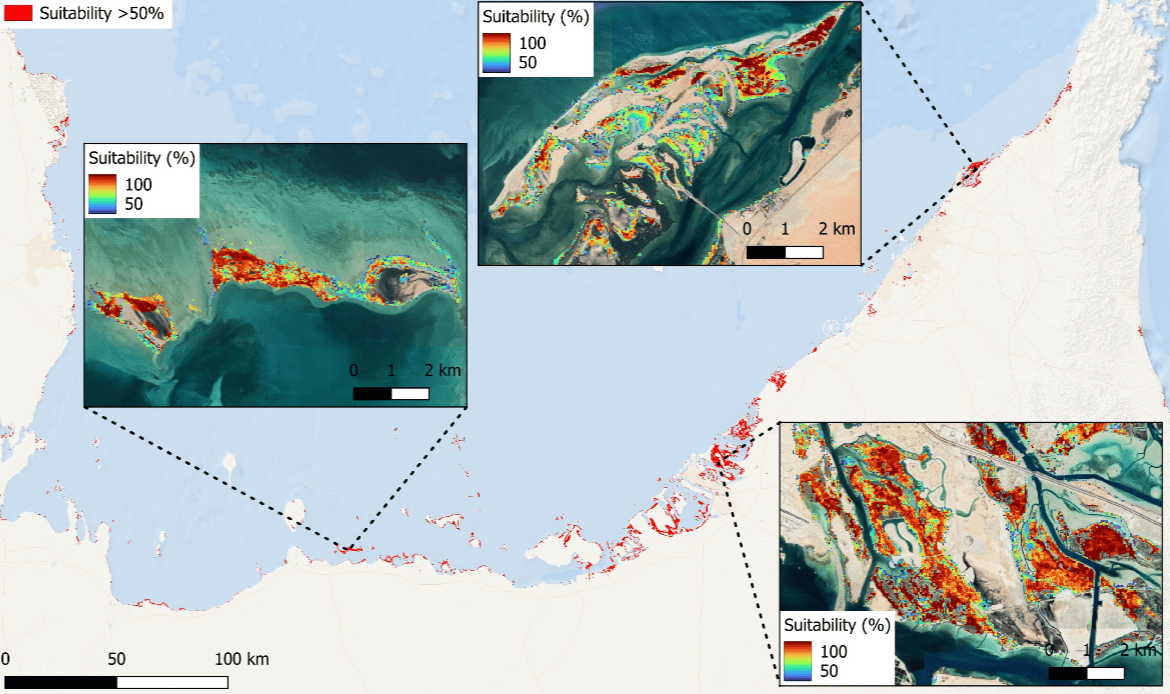
Site selection and assessment are often underestimated, yet they determine what is possible. Hydrology, soil composition, salinity and historical ecosystem dynamics are essential considerations. When these variables are insufficiently understood, interventions become misaligned from the outset.
This misalignment is difficult to correct later. By the time visible signs of stress appear, the project has already absorbed significant cost and effort.
Even when initial conditions are sound, another common failure is linked to how success is measured. Many projects rely on early indicators such as planting completion rates or initial survival percentages. These metrics are useful, but they measure activity, not ecological function.
Ecosystems take years or even decades to recover. A project can meet its early targets while underlying ecological conditions remain unstable. Without continuous monitoring, this instability goes unnoticed.
Monitoring is often treated as an afterthought to be added once implementation is complete. But it is the mechanism that allows restoration to function as an adaptive process. Continuous monitoring enables teams to detect early signs of stress, validate design assumptions, and adjust interventions as conditions evolve. Without it, restoration becomes static - unable to respond to ecosystems that are inherently dynamic.
Scaling Restoration Responsibly
Another layer of complexity comes from the pressure to scale.
Restoration today operates under increasing expectations driven by climate targets, funding timelines and public commitments. Speed becomes a priority, but speed also introduces trade-offs - site assessments are shortened, local variability is overlooked, and standardized interventions replace site-specific ones.
Scaling restoration responsibly requires carrying ecological insight forward at every level of execution.
This is particularly true in coastal ecosystems such as mangroves, where environmental conditions dictate outcomes more than planting volume. Hydrological alignment, salinity balance, sediment stability, and species selection must all be precisely calibrated. Mangroves, for example, are highly sensitive to tidal patterns, and if the conditions are not correct, planting more trees does not improve outcomes - it accelerates failure.
Across ecosystems, the same principle holds. Success depends less on how much is planted, and more on how well environmental conditions support long-term functionality. That functionality does not emerge automatically after planting. It requires sustained operational management.
Planting is a milestone, not a conclusion. It is the beginning of long-term management that ensures ecosystems are monitored and interventions are adapted over time. This continuous management supports vegetation establishment, natural regeneration, and the gradual transition toward self-sustaining systems. Without this continuity, even well-designed projects can lose momentum and degrade.
Managing that complexity increasingly relies on better data and technology. Remote sensing, AI, and ecological models allow for earlier detection of anomalies and more consistent monitoring across large landscapes. They make gradual change visible, but their value depends on how they are used.
This is the operational model that Nabat has built - combining ecological knowledge, geospatial AI, autonomous data capture, and continuous monitoring to make gradual ecosystem change legible and actionable across programs.
Technology does not replace ecological expertise - it complements and scales it. Without interpretation and operational discipline, data alone does not prevent failure.
What Long-Term Success Actually Looks Like
The question is how to properly scale restoration for the long term.
Responsible scaling requires investment in baseline ecological understanding, site-specific design, embedded monitoring, and the operational capacity to manage projects over time. It shifts restoration from being activity-driven to system-driven.
The organizations that avoid these pitfalls share a consistent orientation - they start with the system, not the solution; they prioritize long-term functionality over short-term visibility; they design around hydrology, soil, and ecological processes; and they commit to continuous monitoring and adaptive management.
Restoration success is not defined in the first year. A durable ecosystem reveals itself over five, ten, or twenty years - in self-sustaining vegetation, stable soils, functioning water systems, and biodiversity that reflects a resilient, balanced environment.
Most importantly, over time, it requires less and less human intervention. And when the system is no longer dependent on us, that’s the measure that matters.