%20--%3e%3cg%3e%3cg%20id='Layer_1'%3e%3cg%3e%3cg%3e%3cg%3e%3cg%3e%3cpath%20class='cls-1'%20d='M54.7,12.3c-1.4-1-3.3-1.6-5.5-1.6s-4.1.5-5.5,1.6c-1.7,1.2-2.5,2.9-2.5,5v11.8h5v-11.8c0-.4.1-.7.5-.9.6-.4,1.4-.6,2.6-.6s2,.2,2.6.6c.3.2.4.5.4.9v9.8c0,.5.2,1,.6,1.4.4.4.8.6,1.4.6h3v-11.8c0-2.1-.8-3.7-2.5-5Z'/%3e%3cpath%20class='cls-1'%20d='M75.4,11.1c-1,0-1.9.4-2.5,1.1-1.5-1.1-3.4-1.6-5.5-1.5s-4.4,1.1-6,2.7-2.7,4-2.7,6.5,1,4.9,2.7,6.7,4,2.7,6.6,2.7,3.4-.5,4.8-1.5c.6.7,1.4,1.1,2.5,1.1h1.7V11.1h-1.7ZM71.2,23.2c-.9.9-1.9,1.3-3.2,1.3s-2.3-.5-3.1-1.3-1.2-1.8-1.2-3,.4-2.3,1.2-3.1,1.9-1.3,3.1-1.3,2.2.4,3.1,1.3c.9.9,1.3,1.9,1.3,3.1s-.4,2.2-1.3,3.1h0Z'/%3e%3cpath%20class='cls-1'%20d='M89.5,10.7c-1.5,0-2.8.3-4,1v-6.8h-5v24.1h1.7c1,0,1.9-.4,2.5-1.1,1.5,1.1,3.2,1.6,5.2,1.5s4.7-1.1,6.3-2.8,2.7-4,2.7-6.5-.9-4.8-2.7-6.6c-1.8-1.8-4-2.7-6.6-2.7ZM92.6,23.2c-.9.9-1.9,1.3-3.1,1.3s-2.3-.5-3.1-1.3-1.3-1.9-1.3-3.1.5-2.3,1.3-3.1,1.9-1.3,3.1-1.3,2.3.5,3.1,1.3,1.3,1.9,1.3,3.1-.5,2.3-1.3,3.1Z'/%3e%3cpath%20class='cls-1'%20d='M116.3,11.1c-1,0-1.9.4-2.5,1.1-1.5-1.1-3.4-1.6-5.5-1.5s-4.4,1.1-6,2.7-2.7,4-2.7,6.5,1,4.9,2.7,6.7,4,2.7,6.6,2.7,3.4-.5,4.8-1.5c.6.7,1.4,1.1,2.5,1.1h1.7V11.1h-1.7ZM112.1,23.2c-.9.9-1.9,1.3-3.2,1.3s-2.3-.5-3.1-1.3-1.2-1.8-1.2-3,.4-2.3,1.2-3.1,1.9-1.3,3.1-1.3,2.2.4,3.1,1.3c.9.9,1.3,1.9,1.3,3.1s-.4,2.2-1.3,3.1h0Z'/%3e%3cpath%20class='cls-1'%20d='M157.2,11.1c-1,0-1.9.4-2.5,1.1-1.5-1.1-3.4-1.6-5.5-1.5s-4.4,1.1-6,2.7c-1.8,1.8-2.7,4-2.7,6.5s1,4.9,2.7,6.7,4,2.7,6.6,2.7,3.4-.5,4.8-1.5c.6.7,1.4,1.1,2.5,1.1h1.7V11.1h-1.7ZM153,23.2c-.9.9-1.9,1.3-3.2,1.3s-2.3-.5-3.1-1.3-1.2-1.8-1.2-3,.4-2.3,1.2-3.1,1.9-1.3,3.1-1.3,2.2.4,3.1,1.3c.9.9,1.3,1.9,1.3,3.1s-.4,2.2-1.3,3.1h0Z'/%3e%3cpath%20class='cls-1'%20d='M164.6,10.6c.8,0,1.5-.3,2.1-.9.6-.6.9-1.3.9-2.1s-.3-1.5-.9-2.1c-.6-.6-1.3-.9-2.1-.9s-1.5.3-2.1.9c-.6.6-.9,1.3-.9,2.1s.3,1.5.9,2.1c.6.6,1.3.9,2.1.9Z'/%3e%3c/g%3e%3cpath%20class='cls-1'%20d='M130.2,24c0,0-.2,0-.2.1-.3.2-1.8.3-2.3.3s-1.1-.1-1.4-.4c-.2-.2-.3-.6-.3-1.2v-6.8h2.4c.5,0,1-.2,1.4-.6.4-.4.6-.8.6-1.4v-3h-4.3v-1.6c0-.5-.1-1-.4-1.4-.7-1.1-1.7-1.6-2.8-1.6h-1.7v16.4c0,1.9.6,3.5,1.9,4.7,1.2,1.2,2.8,1.8,4.8,1.8s1.8,0,2.6-.2v-5.3Z'/%3e%3c/g%3e%3crect%20class='cls-1'%20x='162'%20y='11.6'%20width='5'%20height='17.6'/%3e%3cpath%20class='cls-1'%20d='M139.6,26.1c0,1.8-1.5,3.3-3.3,3.3s-2.6-.2-2.8-.2c0,0-.5-2.2-.5-3.1,0-1.8,1.5-3.3,3.3-3.3s2.8.1,3,.4c.2.4.4,2,.4,3Z'/%3e%3c/g%3e%3cpath%20class='cls-1'%20d='M29.3,17.5c-1.9,0-3.5,1.3-3.9,3h-.3c-2.8,0-5.3,1.2-7,3.1v-4.9c0-3.3.5-4.5,3.2-4.6.5,1.6,2,2.7,3.8,2.7s4-1.8,4-4-1.8-4-4-4-3.3,1.2-3.8,2.9c-1.3,0-2.3.3-3.1.7v-4.6c1.6-.5,2.7-2,2.7-3.8S19,.2,16.8.2s-4,1.8-4,4,1.2,3.3,2.9,3.8v4.6c-.8-.5-1.9-.7-3.3-.8-.5-1.7-2-2.9-3.8-2.9s-4,1.8-4,4,1.8,4,4,4,3.2-1.1,3.8-2.7c0,0,0,0,0,0,2.8,0,3.3,1.1,3.3,4.6v4.9c-1.7-1.9-4.2-3.1-7-3.1h-.7c-.4-1.7-2-3-3.9-3S0,19.3,0,21.5s1.8,4,4,4,3.1-1,3.7-2.5h.9c3.9,0,7,3.1,7,7v1.6h-4.2c-.7,0-1.2.5-1.2,1.2s.5,1.2,1.2,1.2h10.9c.7,0,1.2-.5,1.2-1.2s-.5-1.2-1.2-1.2h-4.2v-1.6c0-3.9,3.2-7,7-7h.5c.6,1.5,2,2.5,3.7,2.5s4-1.8,4-4-1.8-4-4-4ZM25,11.4c.9,0,1.6.7,1.6,1.6s-.7,1.6-1.6,1.6-1.6-.7-1.6-1.6.7-1.6,1.6-1.6ZM8.6,14.5c-.9,0-1.6-.7-1.6-1.6s.7-1.6,1.6-1.6,1.6.7,1.6,1.6-.7,1.6-1.6,1.6ZM4.1,23.1c-.9,0-1.6-.7-1.6-1.6s.7-1.6,1.6-1.6,1.6.7,1.6,1.6-.7,1.6-1.6,1.6ZM16.8,5.7c-.9,0-1.6-.7-1.6-1.6s.7-1.6,1.6-1.6,1.6.7,1.6,1.6-.7,1.6-1.6,1.6ZM29.3,23.1s0,0,0,0c0,0,0,0,0,0,0,0-.1,0-.2,0,0,0,0,0,0,0-.8-.1-1.3-.8-1.3-1.5s.6-1.5,1.4-1.6c0,0,0,0,0,0,0,0,0,0,0,0s0,0,0,0c0,0,0,0,0,0,.9,0,1.6.7,1.6,1.6s-.7,1.6-1.6,1.6Z'/%3e%3c/g%3e%3c/g%3e%3c/g%3e%3c/svg%3e)

Last week in London, nabat.ai attended the Nature Tech Unconference - two days that brought together people working across ecology, technology, finance, and restoration. What struck me most wasn't just the range of tools being discussed, but the range of perspectives in the room. It didn't feel like a single industry. It felt like something still forming, still trying to define itself. That diversity made the conversations feel more honest. Less polished, more exploratory. And honestly? That felt right.
The conference opened with an address by Ben Goldsmith, financier and environmentalist that set a genuinely hopeful tone. There was a strong sense that something is shifting - that we are moving toward a world where nature is not only protected, but actively restored, measured, and valued. What resonated with me most was the emphasis on blending advanced technology with more traditional and local knowledge. Not replacing one with the other but reconnecting them.
That idea - of reconnection - stayed with me throughout the week. It also felt very close to home. At Nabat, we think about this constantly. How do you build technology sophisticated enough to operate at scale, but grounded enough to respect the complexity of living ecosystems? There are no shortcuts. You must hold both things at once.
The goal was never to find the perfect dataset. It was to make the best decision you could with the data you had.
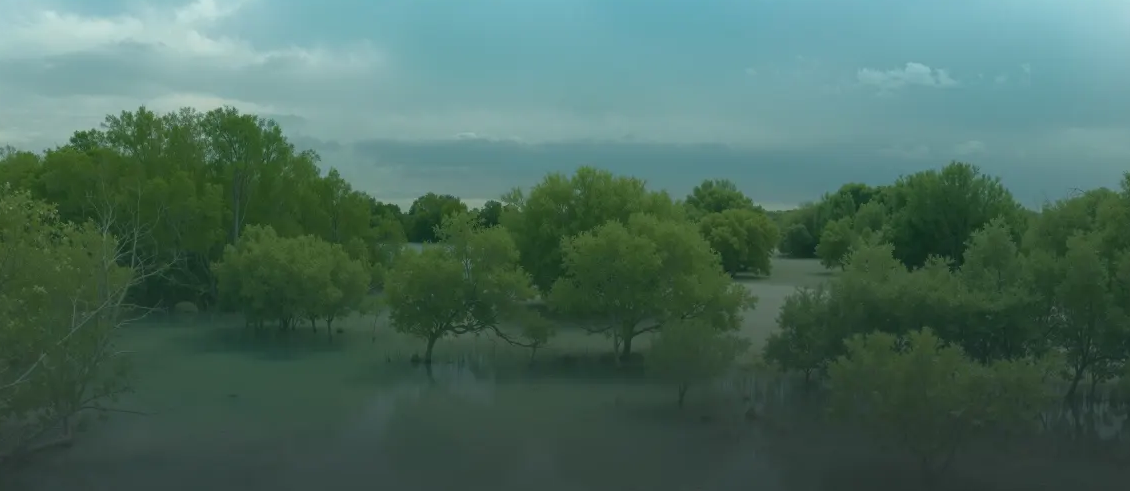
In our session at Nabat, we explored something that sounds simple but quickly becomes complex in practice: how do you measure success in nature restoration, when accuracy is most important to a project manager? Using a mangrove restoration example, we worked through how to track planting success, vegetation health, biodiversity, carbon and other ecological co-benefits as examples for the smaller discussion groups.
At first, it felt like a technical exercise - choosing between satellite data, drone imagery, and field observations. Each offer something different: scale, detail, accuracy. But as the discussion evolved, it became less about the tools themselves and more about the decisions behind them.
Because… you’re almost never designing a monitoring system in ideal conditions.
When we began introducing real-world constraints - limited site access, tighter budgets, permitting challenges, larger geographies - the "best" solution stopped being obvious. People had to adapt. Rely more on satellite data. Reduce field validation. Accept a degree of uncertainty.
This is something we navigate at Nabat every day. Our platform, NabatOS, is built to support exactly these kinds of decisions - combining satellite data, drone imagery, and AI-powered analysis so that teams in the field aren't choosing between scale and accuracy but finding the right balance of both. But even with the best tools available, judgement still matters. What matters isn't whether you're using the most advanced technology, but whether you're using the right combination of data for the context you're working in - and being honest about the trade-offs you're making.
The bigger system we're all operating within
That same tension between ambition and reality came through even more strongly in the sessions that followed.
One discussion around how the nature tech community can deliver more impact shifted away from tools entirely, and onto the broader system we're all operating within.
People spoke openly about the blockers: fragmentation across the sector, uneven access to funding, institutional inertia, and something that was described - half- jokingly but very accurately - as a "scarcity mindset." The sense that we're sometimes competing within a small space, rather than collectively trying to expand it.
There was also a recognition that much of this work still sits within a relatively tight circle. If nature tech is going to scale, it must move beyond that - into finance, into corporate decision-making, into regulatory systems. Otherwise, even the most sophisticated tools risk staying niche.
What I found refreshing was the honesty of the conversation. There were moments where the optimism dipped - where people questioned whether timelines like 2030 are realistic, or whether we're moving fast enough given the scale of the challenge. One person spoke about working in this space for decades and still feeling, at times, unsure whether we can solve it.
And yet, it didn't feel defeatist. If anything, it made the ambition feel more real.
Because alongside that doubt, there was also a clear belief that progress is happening - just not always in the way we expect. Not through one big breakthrough, but through a slow layering of data, tools, regulation, and financial mechanisms that begin to reinforce each other over time.
You start to see how better monitoring enables better policy. How policy begins to shape markets. How markets then drive demand for better data.
It's not linear, but it is moving. And that loop - from data to decision to action to verification - is precisely what Nabat is trying to close. It's why we built NabatOS as an end-to-end platform rather than a collection of individual tools. Because the value isn't in any single layer. It's in how they connect.
Closing the loop between restoration and investment
Another session that stayed with me approached the challenge from a completely different angle - marine restoration, and what it would take to scale it meaningfully.
The problem was framed very simply: nature isn't recovering fast enough, and one of the core bottlenecks is how slow, manual, and disconnected monitoring still is.
The response being explored was ambitious - accelerating ecosystem recovery, monitoring biodiversity in real time using robotics and AI, and then translating those outcomes into something that finance can actually understand and invest in.
What I found compelling wasn't just the technology, but the attempt to close the loop: from restoration, to monitoring, to verified data, to investment. Because without that connection, even successful restoration can remain invisible from a financial perspective - and if it's invisible, it's very difficult to scale.
The phrase that kept coming up was "decision-grade data." Not just data that tells you something interesting, but data that changes behavior - whether that's investment decisions, policy, or how projects are designed and delivered.
This is something we think about deeply at Nabat. Our digital MRV (monitoring, reporting, and verification) work is built on exactly this principle - that data only creates impact when it's trusted, traceable, and actionable. When it can sit in front of a regulator, an investor, or a government agency and genuinely change what happens next.
I saw a different version of this in tools like Climate Policy Radar, which are working to make environmental policy more searchable and accessible. It's not as visible as drones or AI models, but it's just as important. Because if people can't find or interpret the information they need, it creates another barrier between knowledge and action.
The people who make it real
But beyond the sessions themselves, what I'll probably remember most are the people I met.
One of the most valuable parts of the experience was connecting with practitioners working on the ground in completely different contexts. Hearing about their work - and the realities they're navigating every day – made many of the broader conversations feel far more tangible and grounded in the real worldƒ.
It also made me realize how global this space really is. People had come from everywhere - across Europe, but also from much further afield, including Mexico and Brazil. Different ecosystems, different challenges, different constraints - but often grappling with very similar questions around data, scale, and impact.
Those conversations stayed with me. Not just as interesting exchanges, but as potential starting points. There's something quite powerful about seeing how ideas might connect - how tools and approaches developed in one context could support work happening somewhere completely different. How a monitoring methodology tested in the Gulf could inform a restoration program in West Africa. How the financing structures being explored in one region might unlock investment in another.
I left feeling like those relationships are just as important as any of the technology we discussed.
What it all comes back to
By the end of the week, I found myself thinking less about individual tools, and more about the patterns connecting everything I had seen and heard.
Across every session - whether it was mangrove monitoring, marine restoration, policy infrastructure, or impact delivery - the same underlying challenge kept surfacing:
We're not short on data. We're not short on technology. What we're still figuring out is how to connect it all in a way that leads to better decisions - and ultimately, to real impact.
That is, in many ways, the question that Nabat was built to answer. Not to be one more tool in an already crowded space, but to be the connective tissue - the operating system - that helps nature action become precise, scalable, and verifiable.
And maybe that's where the real shift is happening. Not in any single breakthrough, but in the growing recognition that nature can no longer sit outside of our systems - financial, technological, or political. It must be integrated into them. Measured, understood, and yes, sometimes simplified, to be acted upon at scale.
That comes with trade-offs. With imperfect datasets. With decisions that aren't always clear-cut.
But it also creates something we haven't really had before: the ability to act with both ambition and evidence.
Leaving the conference, I didn't feel like we had solved all the problems that each of us, individually, are trying to solve. But I did feel like we're getting better at asking the right questions - and at being honest about the constraints we're working within.
I also felt something else, which I didn't entirely expect, that we are not alone in this. That there are people across the globe - in different ecosystems, different organizations, different disciplines - who share the same sense of urgency, and the same stubborn belief that this is worth doing.
And for now, that feels like progress.