%20--%3e%3cg%3e%3cg%20id='Layer_1'%3e%3cg%3e%3cg%3e%3cg%3e%3cg%3e%3cpath%20class='cls-1'%20d='M54.7,12.3c-1.4-1-3.3-1.6-5.5-1.6s-4.1.5-5.5,1.6c-1.7,1.2-2.5,2.9-2.5,5v11.8h5v-11.8c0-.4.1-.7.5-.9.6-.4,1.4-.6,2.6-.6s2,.2,2.6.6c.3.2.4.5.4.9v9.8c0,.5.2,1,.6,1.4.4.4.8.6,1.4.6h3v-11.8c0-2.1-.8-3.7-2.5-5Z'/%3e%3cpath%20class='cls-1'%20d='M75.4,11.1c-1,0-1.9.4-2.5,1.1-1.5-1.1-3.4-1.6-5.5-1.5s-4.4,1.1-6,2.7-2.7,4-2.7,6.5,1,4.9,2.7,6.7,4,2.7,6.6,2.7,3.4-.5,4.8-1.5c.6.7,1.4,1.1,2.5,1.1h1.7V11.1h-1.7ZM71.2,23.2c-.9.9-1.9,1.3-3.2,1.3s-2.3-.5-3.1-1.3-1.2-1.8-1.2-3,.4-2.3,1.2-3.1,1.9-1.3,3.1-1.3,2.2.4,3.1,1.3c.9.9,1.3,1.9,1.3,3.1s-.4,2.2-1.3,3.1h0Z'/%3e%3cpath%20class='cls-1'%20d='M89.5,10.7c-1.5,0-2.8.3-4,1v-6.8h-5v24.1h1.7c1,0,1.9-.4,2.5-1.1,1.5,1.1,3.2,1.6,5.2,1.5s4.7-1.1,6.3-2.8,2.7-4,2.7-6.5-.9-4.8-2.7-6.6c-1.8-1.8-4-2.7-6.6-2.7ZM92.6,23.2c-.9.9-1.9,1.3-3.1,1.3s-2.3-.5-3.1-1.3-1.3-1.9-1.3-3.1.5-2.3,1.3-3.1,1.9-1.3,3.1-1.3,2.3.5,3.1,1.3,1.3,1.9,1.3,3.1-.5,2.3-1.3,3.1Z'/%3e%3cpath%20class='cls-1'%20d='M116.3,11.1c-1,0-1.9.4-2.5,1.1-1.5-1.1-3.4-1.6-5.5-1.5s-4.4,1.1-6,2.7-2.7,4-2.7,6.5,1,4.9,2.7,6.7,4,2.7,6.6,2.7,3.4-.5,4.8-1.5c.6.7,1.4,1.1,2.5,1.1h1.7V11.1h-1.7ZM112.1,23.2c-.9.9-1.9,1.3-3.2,1.3s-2.3-.5-3.1-1.3-1.2-1.8-1.2-3,.4-2.3,1.2-3.1,1.9-1.3,3.1-1.3,2.2.4,3.1,1.3c.9.9,1.3,1.9,1.3,3.1s-.4,2.2-1.3,3.1h0Z'/%3e%3cpath%20class='cls-1'%20d='M157.2,11.1c-1,0-1.9.4-2.5,1.1-1.5-1.1-3.4-1.6-5.5-1.5s-4.4,1.1-6,2.7c-1.8,1.8-2.7,4-2.7,6.5s1,4.9,2.7,6.7,4,2.7,6.6,2.7,3.4-.5,4.8-1.5c.6.7,1.4,1.1,2.5,1.1h1.7V11.1h-1.7ZM153,23.2c-.9.9-1.9,1.3-3.2,1.3s-2.3-.5-3.1-1.3-1.2-1.8-1.2-3,.4-2.3,1.2-3.1,1.9-1.3,3.1-1.3,2.2.4,3.1,1.3c.9.9,1.3,1.9,1.3,3.1s-.4,2.2-1.3,3.1h0Z'/%3e%3cpath%20class='cls-1'%20d='M164.6,10.6c.8,0,1.5-.3,2.1-.9.6-.6.9-1.3.9-2.1s-.3-1.5-.9-2.1c-.6-.6-1.3-.9-2.1-.9s-1.5.3-2.1.9c-.6.6-.9,1.3-.9,2.1s.3,1.5.9,2.1c.6.6,1.3.9,2.1.9Z'/%3e%3c/g%3e%3cpath%20class='cls-1'%20d='M130.2,24c0,0-.2,0-.2.1-.3.2-1.8.3-2.3.3s-1.1-.1-1.4-.4c-.2-.2-.3-.6-.3-1.2v-6.8h2.4c.5,0,1-.2,1.4-.6.4-.4.6-.8.6-1.4v-3h-4.3v-1.6c0-.5-.1-1-.4-1.4-.7-1.1-1.7-1.6-2.8-1.6h-1.7v16.4c0,1.9.6,3.5,1.9,4.7,1.2,1.2,2.8,1.8,4.8,1.8s1.8,0,2.6-.2v-5.3Z'/%3e%3c/g%3e%3crect%20class='cls-1'%20x='162'%20y='11.6'%20width='5'%20height='17.6'/%3e%3cpath%20class='cls-1'%20d='M139.6,26.1c0,1.8-1.5,3.3-3.3,3.3s-2.6-.2-2.8-.2c0,0-.5-2.2-.5-3.1,0-1.8,1.5-3.3,3.3-3.3s2.8.1,3,.4c.2.4.4,2,.4,3Z'/%3e%3c/g%3e%3cpath%20class='cls-1'%20d='M29.3,17.5c-1.9,0-3.5,1.3-3.9,3h-.3c-2.8,0-5.3,1.2-7,3.1v-4.9c0-3.3.5-4.5,3.2-4.6.5,1.6,2,2.7,3.8,2.7s4-1.8,4-4-1.8-4-4-4-3.3,1.2-3.8,2.9c-1.3,0-2.3.3-3.1.7v-4.6c1.6-.5,2.7-2,2.7-3.8S19,.2,16.8.2s-4,1.8-4,4,1.2,3.3,2.9,3.8v4.6c-.8-.5-1.9-.7-3.3-.8-.5-1.7-2-2.9-3.8-2.9s-4,1.8-4,4,1.8,4,4,4,3.2-1.1,3.8-2.7c0,0,0,0,0,0,2.8,0,3.3,1.1,3.3,4.6v4.9c-1.7-1.9-4.2-3.1-7-3.1h-.7c-.4-1.7-2-3-3.9-3S0,19.3,0,21.5s1.8,4,4,4,3.1-1,3.7-2.5h.9c3.9,0,7,3.1,7,7v1.6h-4.2c-.7,0-1.2.5-1.2,1.2s.5,1.2,1.2,1.2h10.9c.7,0,1.2-.5,1.2-1.2s-.5-1.2-1.2-1.2h-4.2v-1.6c0-3.9,3.2-7,7-7h.5c.6,1.5,2,2.5,3.7,2.5s4-1.8,4-4-1.8-4-4-4ZM25,11.4c.9,0,1.6.7,1.6,1.6s-.7,1.6-1.6,1.6-1.6-.7-1.6-1.6.7-1.6,1.6-1.6ZM8.6,14.5c-.9,0-1.6-.7-1.6-1.6s.7-1.6,1.6-1.6,1.6.7,1.6,1.6-.7,1.6-1.6,1.6ZM4.1,23.1c-.9,0-1.6-.7-1.6-1.6s.7-1.6,1.6-1.6,1.6.7,1.6,1.6-.7,1.6-1.6,1.6ZM16.8,5.7c-.9,0-1.6-.7-1.6-1.6s.7-1.6,1.6-1.6,1.6.7,1.6,1.6-.7,1.6-1.6,1.6ZM29.3,23.1s0,0,0,0c0,0,0,0,0,0,0,0-.1,0-.2,0,0,0,0,0,0,0-.8-.1-1.3-.8-1.3-1.5s.6-1.5,1.4-1.6c0,0,0,0,0,0,0,0,0,0,0,0s0,0,0,0c0,0,0,0,0,0,.9,0,1.6.7,1.6,1.6s-.7,1.6-1.6,1.6Z'/%3e%3c/g%3e%3c/g%3e%3c/g%3e%3c/svg%3e)

Ecological restoration is far more than simply adding trees to the landscape. It is the intentional process of assisting the recovery of a degraded, damaged, or destroyed ecosystem so that it regains its characteristic structure, functions, and capacity to deliver goods and services to society (Society for Ecological Restoration, 2004). It is not merely “greening” a site or installing vegetation for short-term visual appeal.
Restoration approaches fall broadly into two categories: passive and active. Passive restoration involves removing or mitigating the primary stressors (such as altered hydrology, over-exploitation, or pollution) and allowing natural ecological processes; like seed dispersal, tidal flows, and succession, to drive recovery with minimal further human intervention. Active restoration, by contrast, includes direct interventions such as hydrological rehabilitation, species enrichment planting, or soil amendment to accelerate or enable recovery where natural processes alone are insufficient (Global Mangrove Alliance & Blue Carbon Initiative, 2023; Atkinson et al., 2020).
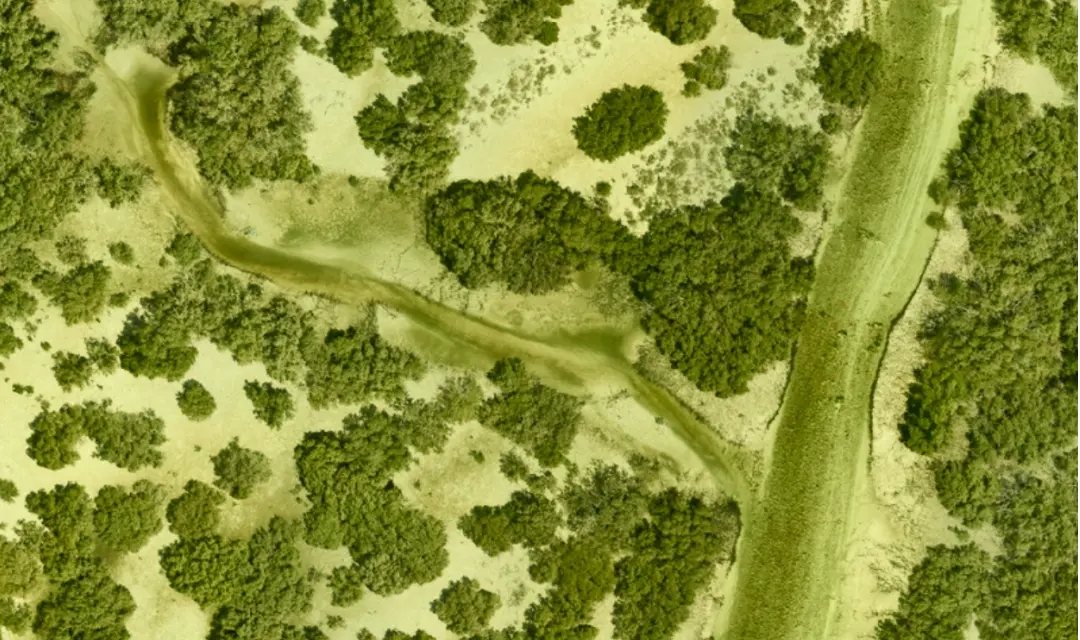
Mangrove restoration follows the same principles but operates in the uniquely challenging intertidal zone, where success hinges on precise tidal inundation regimes, sediment dynamics, salinity gradients, and connectivity to adjacent ecosystems. In the arid Arabian Gulf, this is especially demanding: the dominant species, Avicennia marina (grey mangrove), exhibits remarkable tolerance to hypersalinity, extreme temperatures, and nutrient-poor conditions, yet it remains highly sensitive to disruptions in tidal flow, soil compaction from coastal development, and improper site hydrology.
Yet for too long across the Arabian Gulf, mangrove restoration has frequently relied on ambitious planting campaigns without fully addressing underlying site conditions. Many projects have selected sites without rigorous evaluation of tidal exchange, elevation within the tidal frame, or sediment characteristics, leading to high initial optimism followed by sharp declines in seedling survival. Such outcomes highlight how poor site selection wastes resources, reduces long-term functionality, and can undermine confidence in future efforts (Lovelock et al., 2022).
True mangrove restoration must therefore prove something far more demanding than the number of seedlings deployed. It must demonstrate performance: the long- term re-establishment of a self-sustaining, functionally intact ecosystem that delivers measurable ecological, climatic, and socio-economic benefits. The question is no longer “how many trees did we plant?” but “have we restored a resilient mangrove stand of Avicennia marina that sequesters carbon effectively, supports fisheries, buffers coastlines against erosion and storms, and maintains biodiversity over decades in the Gulf’s harsh conditions?”
Why the Shift from Volume to Value Matters
Many well-intentioned projects in the region have overlooked fundamental ecological requirements. Inappropriate site selection—often driven by development pressures or rapid greening targets—combined with compacted soils from construction, disrupted sedimentation, and blocked tidal flows, leads to stunted growth or failure even for resilient Avicennia marina. Recent analyses emphasize that hydrology-first approaches, frequently emphasizing passive or assisted natural regeneration after stressor removal, outperform blanket planting when site feasibility is rigorously assessed first (Global Mangrove Alliance & Blue Carbon Initiative, 2023).
Modeling and field studies further highlight the risks of suboptimal design. Planting without accounting for elevation in the tidal frame, wave exposure, or local salinity extremes can limit long-term carbon stocks and ecosystem functionality, whereas optimized configurations respecting natural zonation and hydrodynamics significantly enhance outcomes in arid Gulf settings (Beselly et al., 2025).
Performance Metrics That Define Success
Judging mangrove restoration requires robust, outcome-oriented indicators:
- Hydrological functionality — restored tidal exchange and appropriate inundation regimes as the foundational prerequisite, critical in hypersaline Gulf environments.
- Survivorship, growth trajectories, and structural development — moving beyond initial survival to canopy complexity, natural recruitment, and mature stand formation suited to Avicennia marina.
- Carbon accounting — including above- and below-ground biomass as well as stable soil organic carbon fractions, which restoration can enhance through improved mineral-organic interactions (Huang et al., 2025).
- Biodiversity and ecosystem service delivery — fish and invertebrate recruitment, bird usage, shoreline stabilization, and nutrient processing in the context of Gulf coastal resilience.
- Socio-economic co-benefits — sustained community livelihoods, equitable governance, and alignment with regional climate adaptation goals.
Community-based and science-guided approaches that prioritize protection of existing stands, followed by assisted natural regeneration where needed, consistently achieve higher long-term success rates by working with, rather than against, the region’s extreme conditions.
This performance-based vision is reinforced by evolving international frameworks—including the UN Decade on Ecosystem Restoration (2021–2030), Ramsar Convention guidance, and Nationally Determined Contributions (NDCs) under the UNFCCC—as well as blue carbon standards that demand rigorous baselines, additionality, permanence, and monitoring to generate credible credits. Across the Arabian Gulf, national guidelines increasingly adopt a hierarchical approach: prioritize protection and natural regeneration before considering assisted methods or planting. These stress site suitability assessments, hydrological considerations, stakeholder engagement, and monitoring—principles that align restoration with both ecological integrity and access to climate finance while recognizing mangroves as vital nature-based solutions for coastal protection, carbon sequestration, and climate resilience (Lovelock et al., 2024; van Hespen et al., 2023).
An Eye-Opening Opportunity Ahead
When done right, mangrove restoration in the arid Arabian Gulf can sequester substantial carbon, protect vulnerable coastlines from sea-level rise and storms, support fisheries and biodiversity, and advance multiple Sustainable Development Goals—all while leveraging the remarkable resilience of Avicennia marina in one of the world’s most extreme coastal environments. Mangroves exemplify high-performing nature-based solutions for coastal resilience and climate adaptation when guided by sound ecology (Lovelock et al., 2024; van Hespen et al., 2023). Yet this potential will only be realized if we insist on performance over superficial planting metrics.
Recognizing the complementary strengths of both passive and active restoration, the end goal must always remain the full recovery of a self-sustaining ecosystem and the spillover of its services—carbon sequestration, coastal protection, fisheries support, and biodiversity—into measurable benefits for people and the planet. This clear outcome-oriented mindset should inform every decision on intervention type: whether we remove stressors to enable natural regeneration or apply targeted active measures, the chosen path must demonstrably deliver resilient, functional mangrove stands.
The science is unequivocal, the regulatory landscape is maturing, and the tools for evidence-based site selection exist. The critical shift is from counting inputs to verifying outcomes. Mangrove restoration is not always planting—and when planting is needed for Avicennia marina in the Gulf, it must be strategic, informed by detailed site assessments, and part of a broader ecological recovery process.
References
- Atkinson, J., et al. (2020). “Active” and “passive” ecological restoration strategies in meta-analysis. Restoration Ecology.
- Beselly, S.M., et al. (2025). Strategic mangrove restoration increases carbon stock capacity. Communications Earth & Environment.
- Global Mangrove Alliance & Blue Carbon Initiative (2023). Best practice guidelines for mangrove restoration. https://www.mangrovealliance.org/best-practice-guidelines-for-mangrove-restoration
- Huang, X., et al. (2025). Mangrove restoration enhances blue carbon sequestration and its stability. Functional Ecology.
- Lovelock, C.E., et al. (2022). Tackling the mangrove restoration challenge. PLOS Biology.
- Lovelock, C.E., et al. (2024). Mangrove ecology guiding the use of mangroves as nature-based solutions. Journal of Ecology.
- Society for Ecological Restoration International Science & Policy Working Group (2004). The SER International Primer on Ecological Restoration. https://www.ctahr.hawaii.edu/littonc/PDFs/682_SERPrimer.pdf
- van Hespen, R., et al. (2023). Mangrove forests as a nature-based solution for coastal flood protection: Biophysical and ecological considerations. Water Science and Engineering.